Physical Address
304 North Cardinal St.
Dorchester Center, MA 02124
Physical Address
304 North Cardinal St.
Dorchester Center, MA 02124
AI, Software & Digital Insights
AI, Software & Digital Insights
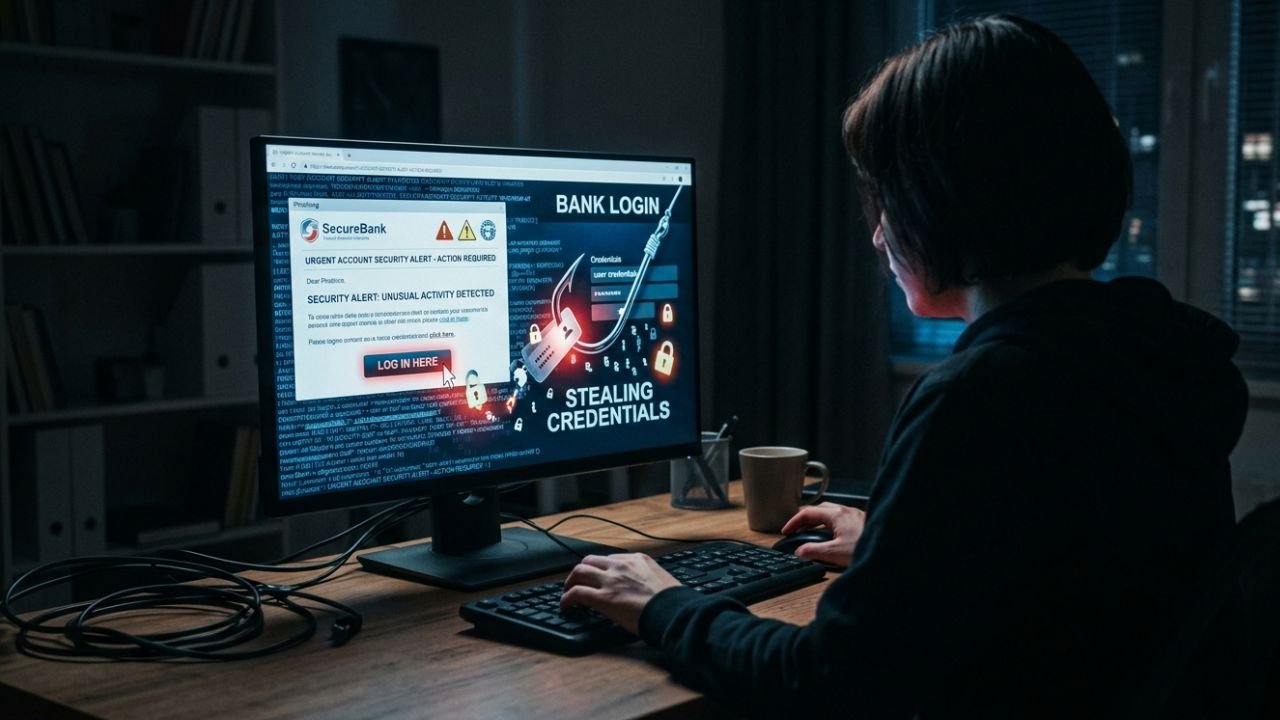
One of the most common cyber threats is phishing attack that affect individuals, organizations, and governments across the globe. Cybercriminals manipulate their victims through trickery, pretense and manipulation to get them to divulge their passwords, banking information, personal information or even sensitive business information. Phishing is also often used by the attackers to install malware, ransomware, or spyware on the device of a victim in many cases.
In comparison to conventional approaches in hacking, which aim at exploiting vulnerabilities in the program, phishing takes the direction of exploiting human trust. To obtain users to do something they otherwise would not do, attackers use identities of trusted organizations, peers, financial institutions, technology organizations or even government agencies. Such a methodology transforms phishing into one of the most effectiveness types of cybercrime currently.
Nowadays phishing attacks are more advanced and challenging to notice due to the further development of digital communication via email, messaging apps, social media, and cloud services. Learning to identify the dangers of being a victim in such attacks along with the mechanisms of their actions can greatly help in preventing such occurrences.
A phishing attack is a form of social engineering where the attackers pose as a trusted source to obtain sensitive information, unauthorized access to system or malicious software. The end objective can also be different based on the attacker, although the majority of phishing activities revolve around monetary gains, identity theft, company espionage, or network intrusions.
The term phishing was coined over the idea that they are fishing after victims. Similarly, to fishermen who cast wide nets in hopes of getting fish, cybercriminals send deceptive messages to many people in hopes that that percentage of them will eat the bait.
The phishing attacks may be used on:
Phishing regularly makes it to the list of the top causes of data breach, ransomware, account takeovers globally in cybersecurity studies.
| Characteristic | Explanation |
|---|---|
| Impersonation | Attackers pretend to be trusted organizations or individuals |
| Social Engineering | Victims are manipulated through psychological tactics |
| Urgency | Messages encourage immediate action |
| Deception | Fake websites and emails appear legitimate |
| Data Theft | Sensitive information becomes compromised |
| Malware Delivery | Malicious software may be installed on devices |
| Scalability | Thousands or millions of users can be targeted simultaneously |
The majority of phishing attacks are organized in a systematic approach to influence their victims and avoid thinking critically. The techniques are different but attackers normally use trust, urgency and familiarity as the tools to increase the chances of success.
Cybercriminals tend to collect data about the targets prior to the attack. These sources may be publicly available like company web pages, social media accounts, press releases, and professional networking sites.
This study assists the attackers to develop messages that are seen to be relevant and believable.
Strong attackers develop messages that are almost similar to those that are sent by legitimate organizations. They often copy:
This is aimed at rendering the message authentic.
The great majority of phishing messages are aimed at causing an emotional reaction. Typical tricks are threats to suspend an account or a warning of suspicious account activity, bills due, or temporary promotions.
When an individual is under pressure, chances are high that he or she will do something without ensuring that the message is accurate.
The message normally directs the recipient to:
In this stage, the attacker tries to intercept information or to install malware.
As soon as the victim takes action, the attacker can:
The negotiations usually take place within the span of few minutes during which the victim contacts the harmful material.
Even with the major developments in cybersecurity technology, phishing is very successful as it focuses on the behavioral aspect of people and not on technical vulnerability.
Automatic security systems are able to block numerous threats automatically, but the attackers understand that a few words can sway a person to believe a fake message and negate various security layers. There are a number of conditions related to the success of phishing.
1. Trust in Recognized Brands
Individuals have a way of believing in organizations that they constantly engage with. Messages that seem to be sent by a bank or a technology company, cloud provider, or employers are less likely to be scrutinized.
2. Information Overload
Each day employees and consumers are flooded with numerous emails, along with notifications and messages. Such information has allowed people to ignore small red flags because of the continuous stream of it.
3. Mobile Device Usage
Good numbers of users examine messages and emails on smartphones. When using smaller screens, links are harder to check on, it is harder to check the address of the sender and there are some tricky formatting that can be detected.
4. Sophisticated Attack Techniques
Automation and artificial intelligence are tools growing in popularity by modern attackers to develop the realistic message of a phishing attack. Such messages also have fewer typos and seem less amateurish compared to previous phishing attacks.
5. Human Psychology
Assailants take advantage of the following feelings:
These emotional appeals are frequently used with greater effect in decision-making than by technical deception per se.
Phishing has advanced into a number of special types. The knowledge of these variations may assist humans and organizations to discover threats better.
The most prevalent type of phishing is email phishing. Attackers employ fake emails purporting to be issued by the genuine bodies. Such messages usually contain counterfeit invoices or password reset messages, and security warnings or account confirmation messages.
Thousands or even millions of people can be targeted by a large scale email phishing campaign. Attackers can get great results even when the percentage of the recipients responding is low.
Spear phishing is geared towards specific individuals or organization. Spear phishing messages are individualized, compared to generic phishing attacks, which relies on the information collected about the victim. Attackers can allude to job descriptions, corporate initiatives, colleagues, or current occurrences to enhance plausibility.
Due to the relevancy of these attacks, they tend to be more successful.
Whaling is a specialized type of spear phishing that targets senior executives and high-profile people.
Common targets include:
Frequently, whaling attacks aim at stealing a large sum of money or intruding upon highly confidential information.
Smishing involves text messaging as opposed to email. The victims might get the following messages:
Since individuals tend to have trust in SMS messages, smishing can be highly effective.
Vishing involves phishing through voice calls. Attackers impersonate the following:
Such calls usually cause panic or a sense of urgency in order to get the victims to divulge confidential information.
The clone phishing definition is a phishing attack where attackers duplicate a trustworthy email and replace its links or attachments with a harmful link or file and send it again to the target.
This is a rather risky attack, as the initial email was authentic. The recipient accepts the message and hence they assume that the message is safe.
| Stage | Description |
|---|---|
| Email Selection | A legitimate email is identified |
| Replication | The original message is copied |
| Modification | Links or attachments are replaced |
| Distribution | The cloned email is resent |
| Exploitation | Victims interact with malicious content |
Here are some of the reasons that attackers usually give:
These messages seem real since they expand on an already existing line of communication.
Suppose that a company has been given a genuine invoice by a supplier. Then, several days after the initial mail, employees are sent another mail which appears as the first one but has a message given that a new invoice has been enclosed. The file has malware.
Since the recipients are aware of the original communication, then they might open the file without doubting its authenticity.
Clone phishing has the potential to cause:
Knownness of the message would greatly enhance success.
An email phishing campaign is a coordinated cyber attack where attackers send fake emails to obtain information, spread malware or programs, or unlawfully access systems.
The contemporary phishing threats can be executed on a large level, and can use advanced infrastructure, automation resources, and specialized cybercriminal networks.
Other campaigns are general campaigns aimed at consumers as a group but others are targeted at a specific industry like health care, financial, educational, manufacturing or government.
Hackers often place domain names that are similar to the reputable brands.
Examples include:
These realms seem real at the initial sight.
The victims are diverted to websites which highly resemble the real log-in portal. As soon as users provide their credentials, the data are sent right to attackers.
Malicious Attachments
Some popular types of malicious files are:
Upon opening these files, they can install malware.
This method is also referred to as “quishing,” and malicious links are embedded into the QR code. Victims download and scan the code with their mobile devices and end up on untrustworthy websites.
A phishing campaign is a larger term that can be used to define any structured phishing campaign performed via email, SMS, voice calls, social media, messaging applications or a combination of one or more modes of communication.
Contemporary scammers are using a mix of more-and-more channels in order to enhance effectiveness.
Innovative phishing campaign can include:
Such a multi-channel strategy renders attacks more authentic and hard to locate.
| Objective | Potential Impact |
|---|---|
| Credential Theft | Unauthorized account access |
| Financial Fraud | Direct monetary losses |
| Malware Delivery | Device compromise |
| Ransomware Deployment | Operational disruption |
| Identity Theft | Personal information misuse |
| Corporate Espionage | Theft of confidential business data |
With the right level of awareness there are many phishing attacks that can have warning signs that are undetectable. Look at the indicators below before engaging with any unforeseen message.
Suspicious Sender Addresses
It is always better to examine the real email address as opposed to the display name. The possibility of unusual domain or misspelling is rarely part of legitimate organizations.
Generic Greetings
Messages that start with words like “Dear Customer” or “Valued User” could be an indication of phishing.
Urgent Requests
Attackers often make false time limits to force victims into instant action.
Unexpected Attachments
Be careful with taking an attachment that was not yet sought or anticipated.
Mismatched Links
Before clicking any links, hover to ensure that it is the correct destination URL.
Fraudulent websites are accompanied by misspellings and forked domains.
The prevention of phishing involves a set of technology, awareness and verification practices.
Enable Multi-Factor Authentication
Multi-factor authentication is an additional security measure that is normally provided with passwords.
Attackers also need to undergo another verification process even if credentials are stolen.
Verify Before Clicking
Creating links by clicking in the emails or the text messages, go directly to the official site of the organization.
Such an easy practice can ward off a lot of phishing.
Use Password Managers
The presence of password managers assists customers in knowing scam websites since they will automatically complete descriptions on only trustworthy sites.
Undergo Security Awareness Training
Phishing awareness should be conducted continuously, along with phishing simulation exercises provided by organizations.
Practising threat identification on a regular basis, employees will become much more resilient to phishing attacks.
Enact Email Authentication Standard
Businesses should deploy:
The protocols serve to prevent the attackers in spoofing company domains.
Keep Software Updated
Frequent updates minimize the chances of attacking malware after making successful phishing attacks.
AI is revolutionizing both the offensive and defensive approaches to cybersecurity.
Attackers are now employing AI tools to:
Meanwhile, AI assists cybersecurity providers in the following tasks:
This is a constant technological fight, and it is influencing the future of phishing protection.
The problem of phishing attack is one of the worst and most efficient types of an cyber crime as it does not rely on any software vulnerabilities but on human deceit. The effects may include monetary losses, information breach, identity theft and ransomware infections, whether it happens through an elaborate email phishing assault, a targeted phishing attack against an organization, and per the clone phishing definition, an attack. Those individuals and organizations who integrate and integrate hard security measures, awareness in employees, multi-factor authentication and relentless monitoring are much better placed to counter the current-day phishing attacks.
Q1. What is a phishing attack?
Phishing attack is a cyber-criminal trick that involves tricks and impersonation to lure victims into providing harmful information or downloading a malware.
Q2. What is the clone phishing definition?
The definition of clone phishing explains that it involves duplicating an authentic email, altering the content with the intent to attack it by sending it back to the target with harmful links or attachments.
Q3. What is an email phishing campaign?
Email phishing campaign is a well-organized action to send scam emails to steal credentials, infect systems with malware, or hijack systems.
Q4. What is the difference between phishing and spear phishing?
Phishing is a technique used to target groups with a general message whereas spear phishing is a technique used to target individuals with personalized information.
Q5. Can multi-factor authentication stop phishing?
Multi-factor authentication can help mitigate risk considerably, but more sophisticated methods of phishing might seek to circumvent less-security-minded implementations.
Also Read About: 15 Cybersecurity Tips to Stay Safe Online in 2026